About Themes Approach Team Contact Disclosures

MACRO-THEMATIC INVESTMENT FIRM

Five Forces Are Reshaping the Global Economy. We Deploy Capital Where They Converge.

SMWC deploys capital across five deeply interconnected secular themes: Energy Security, Real Assets, Infrastructure, Advanced Manufacturing, and Defense Technology. Every allocation passes through a single filter. Projected return must meaningfully exceed the underlying risk.

Get In Touch

THE FIRM

A Different Kind of Capital Allocator

"Our filter is simple. A 10% return backed by hard assets and contracted cash flows is a better investment than a 14% yield built on leverage and optimistic assumptions. We would rather own the lower number."

SMWC Investment Philosophy

SMWC is a macro-thematic investment firm focused on five secular forces reshaping the global economy: energy security, critical materials, infrastructure, advanced manufacturing, and defense technology. We invest at the points where these forces converge, and only when the projected return meaningfully exceeds the risk required to earn it.

These forces do not operate independently. The metals we invest in become inputs for the infrastructure and manufacturing businesses we back. The energy assets we target power the factories and data centers that create demand across our other holdings. Defense spending accelerates adoption of autonomous manufacturing and physical AI. Growth in one theme drives returns in the others.

How We Access Opportunities

Channel One

Specialist Manager Allocations

We allocate to specialist managers with deep expertise in the sectors we target. SMWC pools capital across family offices and other sophisticated investors and negotiates fees directly with the manager as a single, larger allocator. Investors can access these managers independently. What a consolidated commitment commands is better economics than any single check can negotiate alone. Our investors pay lower fees than they would investing on their own.

Channel Two

Independent Sponsor Transactions

When a deal fits our thesis and we can control the structure, we lead it directly rather than allocating through a manager. We originate build-to-suit developments, asset-backed leases with equity participation, capacity reservations, and royalty or offtake arrangements. The common thread is the same in every case: contracted cash flows, strong counterparties, and collateral we can see and value before we commit.

INVESTMENT THEMES

Five Themes. One Interconnected Thesis.

These are not independent investment verticals. Each theme creates structural demand for the others. Growth in one directly lifts utilization, offtake, and returns across the rest.

01

Energy Security

Reliable, affordable, dispatchable power has become a binding constraint on economic growth, industrial competitiveness, and technological progress.

Macro Thesis

Surging demand from AI, data centers, and advanced manufacturing is colliding with an aging, congested grid and geopolitical supply risks. This creates structural alpha for operators delivering firm, non-intermittent energy, particularly off-grid or behind-the-meter solutions that de-risk customers from grid volatility. Energy is foundational: you cannot achieve broader national or economic security without it.

Key Macro Drivers

  • Approximately 70% of U.S. transmission lines are over 25 years old. Interconnection queues and permitting delays are slowing new supply while load accelerates rapidly.
  • AI and data-center power demand could reach 100+ GW by 2030–2035, up from approximately 25 GW recently . This contributes to overall electricity demand growth of 2–5%+ annually in aggressive scenarios, far above historical trends.
  • The Strait of Hormuz carries approximately 20% of global oil consumption and 20% of LNG trade. Any sustained disruption transmits inflation worldwide, underscoring the premium on diversified, resilient energy supply.
  • Europe's pre-2022 reliance on Russian pipeline gas (up to 45% of EU imports in key economies) exposed the continent to sharp price shocks, industrial curtailments, and persistent cost pressures even after diversification. Energy dependence rapidly translates into macroeconomic strain and reduced strategic autonomy.

Key Categories

  • Dispatchable natural gas generation: peaking, firming, and dedicated behind-the-meter capacity for hyperscale and industrial loads. Immediate scalability and operational flexibility as a bridge resource.
  • Nuclear power and SMR development: decades-long, high-capacity-factor baseload (approximately 90%+) for energy-intensive, mission-critical applications. Corporate offtake from hyperscalers is de-risking development and proving commercial viability for co-location.
  • Critical fuels and minerals: supply chain inputs essential to both conventional and next-generation energy production.
  • Behind-the-meter and off-grid systems: dedicated power solutions that bypass grid congestion and deliver reliability independent of utility infrastructure.

Where We Invest

We target operators in dispatchable generation, nuclear development and SMR supply chains, critical fuels and minerals, and behind-the-meter systems. We focus on operational expertise to navigate regulatory and technical complexity while capturing the convergence of AI-driven demand with constrained energy supply.

02

Real Assets

Tangible, commodity-linked investments are entering a multi-decade supercycle driven by structural demand for critical materials and inflation-hedged cash flows.

Macro Thesis

Surging needs from AI infrastructure, energy security, advanced manufacturing, and defense technology are colliding with decades of underinvestment in mining and resource development. These assets deliver predictable, inflation-protected returns with tangible collateral value and embedded commodity upside, while providing essential feedstock to every other theme across the firm.

Key Macro Drivers

  • AI and data-center buildout, grid modernization, electrification, and reshoring are creating unprecedented demand for base and specialty metals. Copper, lithium, nickel, rare earths, and specialty alloys are in structural deficit.
  • Permitting delays, capital intensity, and concentration in higher-risk jurisdictions constrain new supply. Tier-1 assets in stable jurisdictions (North America and Australia) command a clear valuation premium.
  • Real assets provide built-in inflation protection with long-duration, commodity-linked or royalty-style cash flows that have low correlation to traditional equities.

Key Categories

  • Critical metals and minerals: mining, processing, and resource finance structures (royalties, streaming, offtake-linked debt and equity) for copper, lithium, nickel, cobalt, rare earths, and specialty alloys.
  • Precious metals: gold and silver as both inflation hedges and growing industrial inputs across electronics, catalysis, and defense.
  • Resource finance and royalty vehicles: creative capital structures that provide non-dilutive funding to high-quality projects in exchange for royalties or streaming rights, delivering cash-flow yield plus commodity participation with downside protection.

Where We Invest

We seek control or influential stakes in operating businesses, royalty portfolios, and resource-finance vehicles where we can apply sector expertise to optimize assets and capture development upside. Emphasis on metals-heavy opportunities in stable jurisdictions, structured to deliver inflation-hedged cash flows plus commodity participation.

03

Infrastructure

Essential, long-lived assets that deliver critical services are in the early stages of a multi-decade supercycle driven by decades of underinvestment and unprecedented new structural demand.

Macro Thesis

Much of the existing base (grids, rail networks, ports, pipelines) was built in the 1960s through 1980s and is now operating well beyond design life. New structural demand from AI and data-center growth, energy transition, supply-chain reconfiguration, and advanced manufacturing is driving capital requirements at a scale the market has not seen in decades. These assets provide inflation-hedged, contracted cash flows, high barriers to entry, tangible collateral value, and defensive characteristics.

Key Macro Drivers

  • A replacement and modernization supercycle: sustained capex waves in transmission, rail, ports, and pipelines are structurally unavoidable.
  • New demand from interconnected themes: AI-driven power loads, reshoring of advanced manufacturing, and resilient logistics requirements are accelerating the need for transmission infrastructure, specialized digital facilities, and efficient transportation networks.
  • Contracted, visible cash flows: regulated or long-term contracted revenue models (tolls, leases, PPAs, take-or-pay agreements) deliver predictability and inflation protection in volatile macro environments.

Key Categories

  • Transportation and logistics infrastructure: rail networks, intermodal facilities, ports, and chassis fleets. The target profile is stable, essential-use assets with long-term leases, fleet optimization potential, and geographic expansion opportunities.
  • Energy and utility infrastructure: transmission and distribution networks, energy storage, pipelines, and midstream assets.
  • Digital and specialized infrastructure: data centers, fiber networks, and purpose-built industrial real estate directly enabling AI and physical-world applications.

Where We Invest

We seek control or influential stakes in operating businesses and asset portfolios where operational expertise can enhance value. Emphasis on essential-use assets with contracted revenue, tangible downside protection, and clear scalability.

04

Advanced Manufacturing & Physical AI

AI is moving from software into the physical world, creating scalable, high-margin businesses that solve the core barriers to reshoring while unlocking trillions in physical-world productivity.

Macro Thesis

Advanced manufacturing is being redefined by the convergence of precision production systems with embodied AI: robotics, autonomous cells, and AI-orchestrated factories. This solves labor shortages, high-mix and mid-volume economics, and supply-chain resilience, unlocking scalable precision production for energy, semiconductors, medical, aerospace, and robotics applications.

Key Macro Drivers

  • Western markets face acute shortages of skilled machinists and process engineers. AI-driven automation delivers 83–95% reductions in skilled labor requirements while doubling equipment efficiency, with overall equipment effectiveness exceeding 70%.
  • Precision components for energy systems, semiconductor equipment, medical devices, aerospace, and robotics cannot be economically produced at scale in the West without new models. AI-native factories change the economics: China-cost parity with onshore speed, 10x faster lead times, and replicable unit-factory blueprints.
  • Hyperscalers, major OEMs, and defense primes are prioritizing near-shore, reliable suppliers, creating durable contracted demand for AI-native manufacturers.

Key Categories

  • AI-native autonomous factories: closed-loop production systems combining robotics, machine learning, and process optimization to run 22/7 with minimal skilled labor. These serve energy, semiconductor equipment, medical devices, aerospace, and data-center infrastructure.
  • Precision components and high-mix manufacturing: CNC machining, specialty alloys, and custom parts production for sectors where tolerance, speed, and reliability are non-negotiable.
  • Factory operating systems and process automation: the software and orchestration layer that enables autonomous cells, real-time quality control, and replicable unit-factory blueprints.
  • Purpose-built manufacturing facilities: dedicated, grid-independent production sites with on-site power generation, co-located near major demand centers.

Where We Invest

We focus on asset-backed and hybrid structures rather than pure startup risk. Sponsor-backed development vehicles that acquire land, build dedicated facilities, install grid-independent power, and lease to proven operators with equity conversion options deliver immediate cash-flow yield, tangible collateral, and full thematic alignment. We target businesses where operational involvement in facility design, energy integration, and customer proximity drives measurable value.

05

Defense Technology

Defense technology is undergoing a structural shift from high-cost legacy systems to attritable, mass-scalable, AI-enabled weapons, redefining the economics of modern conflict.

Macro Thesis

Rapid innovation cycles and extreme cost asymmetries are reshaping warfare and creating durable investment opportunities in dual-use autonomy, secure supply chains, precision components, and resilient infrastructure. These tailwinds reward businesses that deliver speed, scale, and affordability, with contracted visibility, high margins, and multiple expansion as militaries worldwide adapt.

Key Macro Drivers

  • In Ukraine, FPV drones have evolved from niche tools to decisive weapons, accounting for 80–90% of frontline casualties in recent periods. Ukrainian forces have shortened design-to-deployment cycles to weeks, with advancements including winged FPV variants, fiber-optic guidance, and deep-rear strikes reaching 20–60+ kilometers beyond traditional lines.
  • The math of modern conflict is unambiguous: a Shahed-style drone costs approximately $20,000–$50,000. A Patriot-class interceptor costs $3–4 million. Defenders cannot sustainably expend million-dollar missiles against thousands of low-cost attritable systems. The result is a structural pivot toward scalable, AI-orchestrated counter-drone solutions and autonomous swarms.
  • Defense budgets are reallocating toward software-defined autonomy, robotics, advanced sensors, and edge AI. Commercial innovation in physical AI increasingly feeds defense needs, lowering unit costs and accelerating capability deployment.

Key Categories

  • Autonomy and robotics components: precision parts, sensors, and subsystems for autonomous drones, ground vehicles, and counter-drone systems produced at scale through AI-native manufacturing.
  • Secure and resilient supply chains: near-shore production of mission-critical components that reduce dependence on concentrated or adversarial sourcing.
  • Advanced materials and specialty alloys: high-performance inputs for hardened systems, propulsion, and electronics that underpin next-generation defense capabilities.
  • Dual-use technology manufacturers: businesses whose commercial production in physical AI, robotics, and precision manufacturing directly serves defense applications at lower cost and faster iteration.

Where We Invest

We target operating companies and technology-enabled manufacturers with proven dual-use capabilities. Hybrid structures combining real-asset yield with operating upside and equity participation deliver risk-adjusted returns through visible contracted cash flows, operational leverage, and the structural re-pricing of innovation speed and cost-effective resilience in modern defense.

THEMATIC ARCHITECTURE

One Thesis. Compounding Returns.

Each theme creates structural demand for the others. Growth in one directly lifts utilization, offtake, and returns across the rest. This is not diversification. It is compounding.

Energy Security Defense Tech Adv. Manufacturing Real Assets Infrastructure

Feedstock Layer

The metals and minerals we invest in are the physical inputs for infrastructure, advanced manufacturing, and defense systems. Demand for these materials is structural and accelerating. Supply is constrained by permitting timelines, capital intensity, and geographic concentration in higher-risk jurisdictions.

Power Layer

Autonomous factories, data centers, and defense facilities cannot tolerate power interruptions. The consequences of downtime are not inconvenient, they are catastrophic. The grid cannot reliably guarantee uptime for concentrated, always-critical loads. That gap is the investment opportunity.

Acceleration Layer

Defense procurement is pushing autonomous manufacturing, robotics, and physical AI forward at a pace the commercial market would not reach on its own. The unit economics improve. The supply chains deepen. Every other theme we invest in benefits from that acceleration directly.

OUR APPROACH

Disciplined. Structured. Operator-Minded.

Risk-Adjusted Return Discipline

We evaluate every investment the same way: does the projected return justify the risk required to earn it? Not the headline yield in a base case. The return we can reasonably expect accounting for what goes wrong. A 10% return with hard collateral and contracted cash flows clears that bar. A 14% yield that depends on leverage, sponsor execution, and favorable exit conditions often does not. We pass on the latter regularly.

De-Risked Entry Structures

The price we pay and the structure we negotiate are where our margin of safety lives. We require contracted cash flows, hard assets as collateral, and terms that define our downside before we commit capital. If the investment only works in the base case, it does not meet our standard. The return has to be visible in the structure at entry, not dependent on what the market does after we own it.

Operational Expertise

Capital allocation is our function. Operations belong to the people we back. What we do is identify operators and managers with genuine domain expertise in the sectors we target, structure deals that align their incentives with ours, and stay close enough to the investment to know when something is off. We are not passive. We are selective about who we trust with our investors' capital, and rigorous about holding them accountable to the thesis we underwrote.

THE TEAM

The People Behind the Firm.

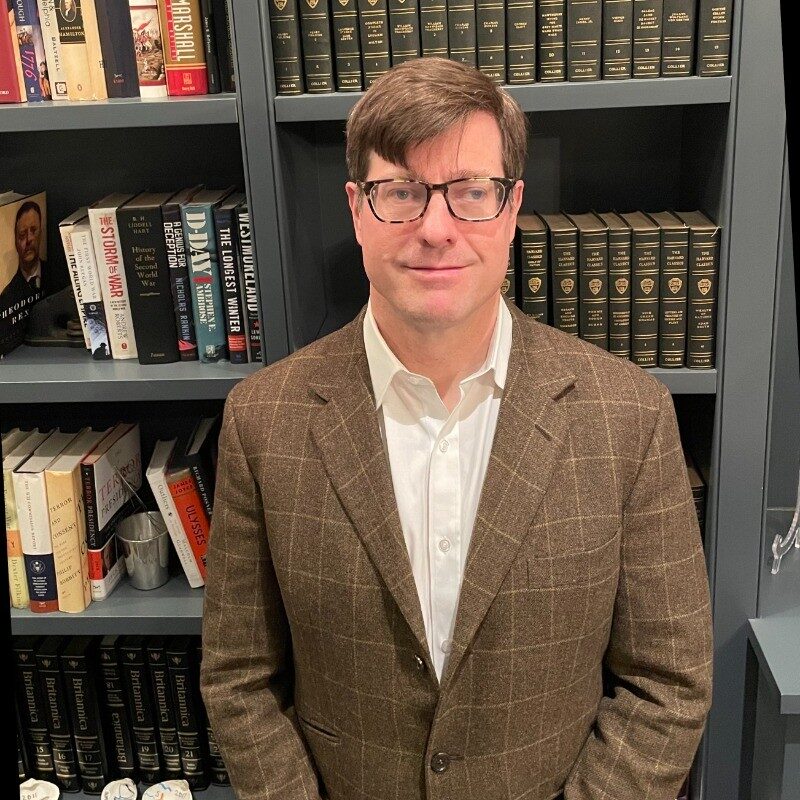
Sam Caspersen

Sam Caspersen

Chief Executive Officer

Sam Caspersen has fifteen years of experience investing across alternative asset classes within a family office, with a focus on portfolio construction, manager selection, and direct private transactions. He has conducted due diligence on more than 300 alternative investment managers spanning private equity, real assets, infrastructure, and resource finance. That body of work is the foundation for how SMWC evaluates managers, sizes positions, and structures investments.

Sam is a graduate of Harvard Law School. He began his career as a trusts and estates attorney at Sullivan & Cromwell, advising high-net-worth families on tax and estate planning, and later served as counsel to investment firms. Earlier, he was investigative counsel to the federal 9/11 Commission and a contributing author to the Commission's Final Report.

At SMWC, Sam leads investment origination, manager due diligence, and deal structuring across all five themes. His approach is grounded in rigorous risk assessment, tax-aware portfolio design, and a preference for contracted cash flows and tangible collateral over headline yield.

Marc Damiano

Marc Damiano

President & Co-Founder

Marc has spent his career in financial services, working at UBS, Fidelity, and multiple independent advisory firms before co-founding SMWC. That range of experience across institutional and independent settings shaped his focus on alignment of interest, transparent fee structures, and disciplined capital deployment.

At SMWC, Marc oversees investor relations, capital raising, and the firm's strategic direction. He is responsible for building and maintaining the relationships with family offices and institutional investors who invest alongside the firm.

CONTACT

Begin the Conversation.

SMWC works with a select number of family offices and sophisticated investors. Schedule a meeting directly, or reach out by phone or email.